Let's cut to the chase. The short answer is: for the foreseeable future, yes. But the long answer, the one that matters for your investments and your understanding of the world, is far more nuanced. The dollar's supremacy isn't guaranteed by divine right. It's a title earned through a specific set of historical circumstances and maintained by a powerful network effect—a financial system where everyone uses dollars because everyone else uses dollars. That network is now facing its most serious stress test in decades. We're not talking about a sudden collapse next Tuesday. We're talking about a slow, grinding erosion of dominance, and the scenarios that could unfold are what every savvy person needs to understand.
What's Inside: Your Quick Guide
- What Being the Reserve Currency Actually Means (It's Not Just Pride)
- The Three Pillars Holding Up the Dollar's Throne
- The Cracks in the Foundation: Real Threats, Not Hype
- The Challengers: Who (or What) Could Take Over?
- Three Realistic Scenarios for the Next 15 Years
- What This Means for Your Wallet and Your Future
- Your Burning Questions Answered
What Being the Reserve Currency Actually Means (It's Not Just Pride)
This isn't about bragging rights. It's about concrete, massive economic advantages. When the US dollar is the world's primary reserve currency, it means central banks, governments, and major institutions hold vast amounts of their savings in dollars and dollar-denominated assets (like US Treasury bonds). It means international trade—oil, semiconductors, soybeans—is overwhelmingly priced and settled in dollars. This creates a self-reinforcing cycle.
The US can borrow money more cheaply because global demand for its debt is insatiable. American companies face less currency risk when doing business abroad. And in a crisis, everyone rushes to buy dollars, making it a safe-haven asset that actually strengthens when trouble hits elsewhere—a privilege no other country has. Losing this status wouldn't be a gentle decline; it would mean higher borrowing costs, a weaker currency amplifying inflation, and a significant loss of global financial influence.
The Three Pillars Holding Up the Dollar's Throne
The dollar's position rests on a tripod. Knock out one leg, and it wobbles. Knock out two, and it's in serious trouble.
1. Deep, Liquid, and Trusted Financial Markets. The US Treasury market is the deepest and most liquid debt market on the planet. You can buy or sell billions of dollars worth of bonds in minutes with minimal price impact. Compare that to trying to move billions in, say, Chinese government bonds. The infrastructure—the legal system, the settlement processes—is transparent and reliable. This liquidity is a magnet for global capital.
2. The Full Faith and Credit of the US Government. Despite political drama, US Treasury bonds are still seen as the ultimate risk-free asset. The US has never defaulted on its debt in its own currency (it can always print more dollars to pay it back, which brings its own problems, but that's a different story). This trust is paramount.
3. The Network Effect and Institutional Inertia. This is the most underestimated pillar. The entire global financial system—SWIFT messaging, correspondent banking, trade finance documentation—is built around the dollar. Rewiring this is like trying to change the language of global business from English to Mandarin. It's possible, but incredibly slow and expensive. Everyone is locked in.
The Cracks in the Foundation: Real Threats, Not Hype
Okay, so the pillars are strong. But they're getting weathered. The threats aren't coming from one direction; they're a multi-front assault.
Geopolitical Weaponization. This is the big one. Using dollar access as a foreign policy tool—like freezing Russia's central bank reserves after the invasion of Ukraine—was a shock to the system. It worked as intended to pressure Moscow, but it sent a chilling message to every other nation: "Your dollars in New York or London aren't entirely yours." It's the ultimate paradox. The strength of the dollar system (US control over it) is now its greatest vulnerability, as it incentivizes rivals to build alternatives. A report from the International Monetary Fund (IMF) has repeatedly noted the rise in "fragmentation" of the global monetary system.
Staggering US Debt. The US national debt is over $34 trillion and climbing. While the US can technically service this debt by printing money, the long-term consequences are a debasement of the currency's value. If investors start to believe the US is on an unsustainable fiscal path, the demand for its debt could wane, raising interest rates and eroding the first pillar. The Congressional Budget Office regularly publishes sobering long-term budget outlooks that feed this narrative.
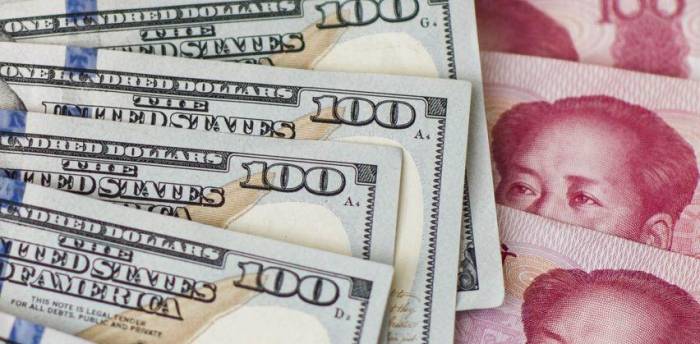
The Rise of Regional Blocs. Countries are increasingly setting up bilateral trade agreements that bypass the dollar. China pays for Saudi oil in yuan. India buys Russian oil in rupees or dirhams. These are still small in volume, but they're pilot projects. If they scale, they chip away at the dollar's monopoly on trade invoicing.
The Challengers: Who (or What) Could Take Over?
Let's evaluate the contenders realistically, not ideologically.
| Challenger | Strengths | Fatal Flaws (The Devil in the Details) | Realistic Outlook |
|---|---|---|---|
| The Chinese Yuan (Renminbi) | Backing of the world's second-largest economy; massive global trade footprint; active promotion by Beijing. | Capital controls limit free convertibility; opaque legal system and political interference (see Evergrande); lack of deep, trusted bond markets. | A regional trade currency, not a global reserve. Central banks will hold some for diversification, not replacement. |
| The Euro | Large, developed economy; deep financial markets; a credible central bank (ECB). | Lacks a unified fiscal policy (no "Eurobond" backed by all); perennial existential crises (Greek debt, Brexit, etc.). It's a fragmented political project first. | Stable #2 reserve currency. Its share may grow slightly, but it lacks the political unity to challenge for #1. |
| Special Drawing Rights (SDR) | IMF-created basket currency (USD, EUR, CNY, JPY, GBP); inherently diversified. | It's an accounting unit, not a real currency. You can't buy groceries with SDRs. There's no private market for SDR-denominated assets. | A tool for official IMF transactions. Zero chance of becoming a public global currency. |
| Digital Currencies (CBDCs & Crypto) | Potential for faster, cheaper cross-border payments; could bypass traditional banking channels. | Wild volatility (crypto); privacy concerns and state control (CBDCs); currently solve a problem (slow payments) that isn't the main reason the dollar is dominant. | A new payment rail, not a reserve asset. A digital dollar would reinforce USD dominance, not undermine it. |
The table tells the story. There is no single, ready-made successor. This is why the dollar's position is so sticky.
Three Realistic Scenarios for the Next 15 Years
Forget about "dollar collapse" headlines. The future is messier and more interesting.
Scenario 1: The Slow Erosion (Most Likely)
The dollar's share of global reserves gradually declines from about 60% today to maybe 50% or even 45%. The euro and yuan pick up a few points each. More trade happens in non-dollar currencies. The US still has the premier financial system, but its "exorbitant privilege" is less exorbitant. Borrowing costs creep up. The world becomes multipolar in currency terms, but the dollar remains first among unequals. This is a slow bleed, not a heart attack.
Scenario 2: The Fragmented Bloc System
Geopolitical tensions escalate to the point where the world economically decouples. You have a US/Europe/dollar bloc, a China/Russia/parts of Global South/yuan bloc, and maybe other regional clusters. Trade and finance happen primarily within blocs. The global dollar network splinters. This is bad for global growth and efficiency, but it means the dollar remains dominant within its sphere. Its global share falls more sharply, but its importance within its alliance is unchallenged.
Scenario 3: The Reinvention (The Long Shot)
The US gets its fiscal house in order, invests in productivity, and leads the next wave of technological innovation (AI, energy). It partners with allies to create a next-generation digital currency platform for cross-border payments that is open, efficient, and rules-based. The dollar, potentially in a digital form, gets baked into the new infrastructure first. This would reinforce its dominance for another generation. It's possible, but requires political will that currently seems in short supply.
What This Means for Your Wallet and Your Future
This isn't an academic debate. If you have a retirement account, own a business, or follow the news, here's the translation.
For Investors: The era of a strong, stable dollar being the default assumption is over. Diversification is no longer a suggestion; it's a necessity. This doesn't mean betting against the dollar, but acknowledging that other assets will behave differently.
- International Stocks: A weaker long-term dollar trend boosts returns from non-US investments when converted back to dollars.
- Commodities & Real Assets: Gold, energy, and infrastructure often act as hedges against currency debasement and inflation.
- Avoid Home Bias: Don't have 100% of your portfolio in US assets. A global index fund is the simplest antidote.
For Business Owners: If you import or export, currency volatility is your new normal. Explore hedging tools. Consider pricing in a basket of currencies if you have the leverage. Build relationships with banks that have strong international capabilities.
For Everyone: Pay down variable-rate debt. In a world of higher structural interest rates (partly due to less foreign demand for US debt), carrying credit card balances or adjustable-rate mortgages becomes even more dangerous.
The dollar's reign as the world's reserve currency isn't ending with a bang. It's facing a thousand cuts—geopolitical decisions, fiscal missteps, and the natural rise of other economies. The most probable future is one where the dollar remains the most important currency, but its dominance is diluted. It becomes the lead singer in a band, not a solo act. For you, the practical takeaway is to build a financial life that isn't reliant on a single, unchallenged global currency. Think diversification, resilience, and paying attention to the long-term shifts that happen one trade deal, one bond auction, and one geopolitical maneuver at a time.
Leave a Comment